How Casino Vocabulary Became Screen Shorthand
Casino vocabulary on screen makes tables, chips and cards instantly legible. Learn to separate a scene’s visual shorthand from its story, genre and context.
The common mistake is to treat casino vocabulary on screen as a timeless code: a green table, a fan of cards and a stack of chips, with the meaning supposedly obvious. That shortcut costs viewers context. Familiar props can signal risk or glamour without showing how a game works or what a particular audience is expected to recognise.
Casino vocabulary on screen
Screen shorthand is built from repeated choices, not from a universal visual dictionary. A card table can suggest deception, competition or simply a setting; the surrounding performance and story determine which reading fits. Without a named production or a specific scene, it is safer to describe what is visible than to make claims about when a convention began or how widely it was recognised.
That distinction matters for translation and cultural analysis. A prop may remain easy to identify across languages while the joke, social status or genre reference attached to it does not. The image can travel intact; its implications may not.
Props carry signals
Cards offer a compact image of hidden information. Chips make an abstract stake visible, while a roulette wheel can provide movement and a pause before an outcome. These are useful dramatic devices because a camera can return to them quickly, without requiring a character to explain the scene.
Colour, texture and sound reinforce the setting. Felt, polished surfaces, formal clothes and the click of chips may help distinguish a casino from a casual card game, but they are choices made for the screen. A film can combine details associated with different places or periods because the combination reads clearly to its intended audience.
Sound is part of that construction. Cards sliding or chips touching may be made prominent in the mix, even when the scene concentrates on a face. Such cues shape attention; they are not a neutral recording of a venue.
Genre assigns meaning
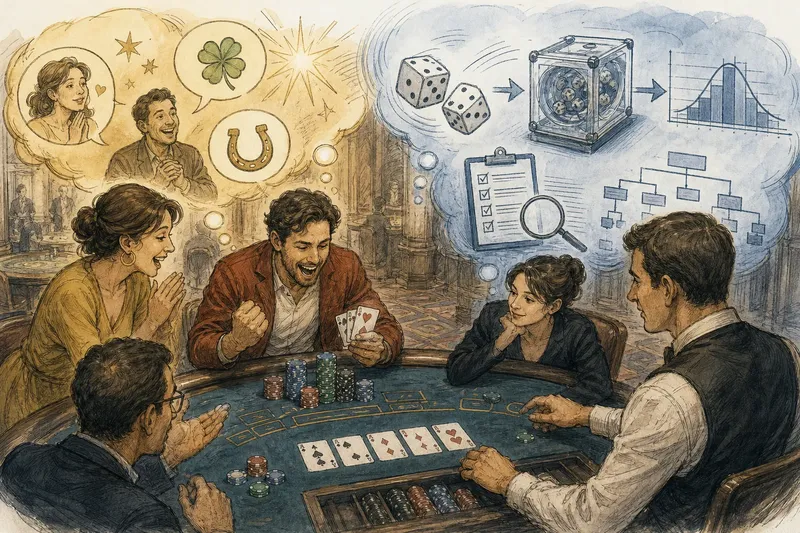
A heist story may use a gaming floor to suggest surveillance, distraction or a timed route. A comedy can make its formality a source of embarrassment, while a crime drama may use the table to stage suspicion. The same prop can therefore carry different meanings without changing its appearance.
Genre also invites assumptions. A close-up of a player’s hand may imply expertise, even if the script has not established it. A lavish room may suggest wealth without explaining who owns or operates the space. Separate the object from the inference: note what the scene shows, then identify what the story encourages the viewer to conclude.
Formats change the frame
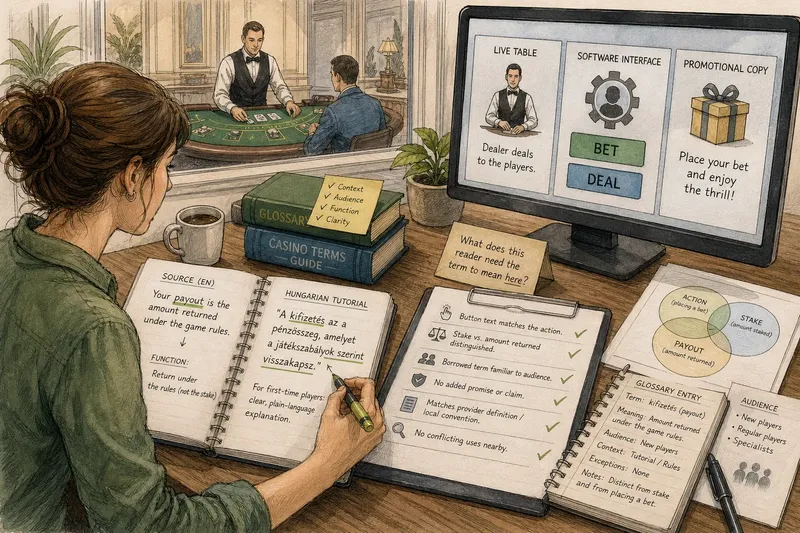
Television, games and streaming arrange casino imagery in different ways. A drama may linger on a character’s expression; a game format may explain rules and outcomes; an interactive game may turn cards, chips or score displays into controls. In each case, the screen has to make the relevant action legible, but legibility is not the same as realism.
Clips add another change. A short excerpt may preserve a striking gesture while losing the dialogue or earlier action that explains its tone. Subtitles can carry the words, but they cannot always supply a cultural reference that the scene leaves implicit.
What should viewers ask?
Why do chips appear so often?
Chips give a visible form to a stake, making them easy to frame and return to during a scene. Their presence alone does not tell the viewer how a particular game works.
Does screen imagery show real casino practice?
Not by itself. A production may use objects and gestures for pace, mood or genre recognition, so viewers should distinguish dramatic convention from an account of a specific game or venue.
Why do casino scenes differ by genre?
Genres select different meanings from the same visual vocabulary. A crime story may stress concealment, while a comedy may use the room’s formality to expose misplaced confidence.
What changes when a scene is clipped?
A clip can keep an image while dropping the dialogue and story context that shape its meaning. Captions, surrounding lines and the scene’s place in the plot all affect interpretation.
A scene-reading method
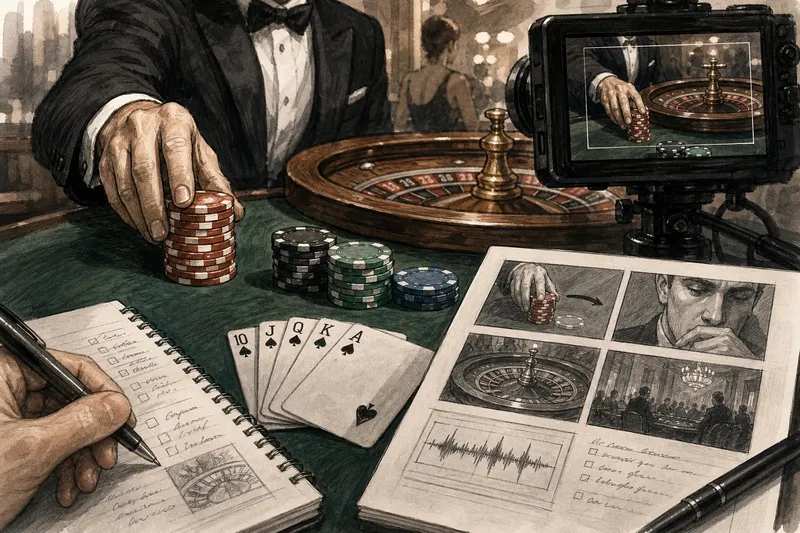
Say you are annotating an invented scene: a character pushes a stack of chips forward while a wheel turns behind them. The starting evidence is the gesture, the wheel and their positions in the frame; none of it establishes whether the character is confident or performing for someone. You note the camera’s attention and the dialogue, then write that the gesture is visible while confidence remains an interpretation. The resulting note separates evidence from inference rather than treating a familiar prop as proof.
For a concise viewing record, use these checks to decide what your description can support:
- Objects: Check which props establish the setting; if cards, chips or a wheel are visible, name them, and if they are absent, describe the setting without claiming a prop-based cue.
- Action: Check what changes on screen; if a character moves a prop, record the movement, and if the action is off-screen or unclear, mark it as implied rather than observed.
- Sound: Check which noises are audible and when they enter; if a sound is prominent, note its timing, and if its source is unclear, avoid assigning it to a specific object.
- Framing: Check whether the camera favours a player, table or room; if one dominates, describe that emphasis, and if the frame is wider or shifting, record the change instead of naming a single focus.
- Genre: Check which story pattern the scene signals; if the surrounding plot supports a heist or comedy reading, state that context, and if it does not, keep the genre interpretation tentative.
- Context: Check what dialogue or prior action a short clip omits; if an omitted detail affects tone, mention the limitation, and if the clip preserves the relevant context, explain the reading from what remains visible and audible.
It is not worth decoding every chip colour or background object as a hidden clue. Unless the story draws attention to a detail, close inspection can turn ordinary set dressing into a theory the scene does not support.
Reading cues with care
Casino vocabulary on screen is a collection of cues whose meanings depend on format, genre and audience. Cards, chips and tables may identify a setting, but editing and performance give them their dramatic job. For translation, it helps to preserve that distinction: describe the visible cue, then explain the implication only when the story supports it.
A final useful check is to ask what would remain if the prop were removed. If the scene’s meaning still comes through in dialogue, framing or action, the object may be atmosphere. If the story depends on the object, name the specific role it plays rather than treating its familiar appearance as a universal explanation.