A Two-Language Viewing Plan for One Casino Scene
A two-language viewing plan for a casino scene helps you compare subtitles, build a compact vocabulary list and notice what each version emphasises.
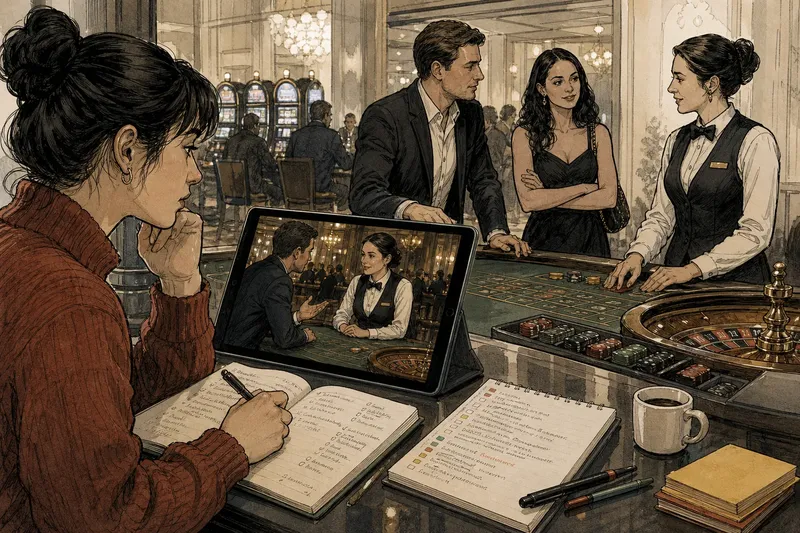
The common mistake with a casino scene is to pause at every unfamiliar word and turn a few minutes of drama into a vocabulary exam. A two-language viewing plan works better when you watch the scene first for its action, then compare how each subtitle track directs your attention. The cost of constant pausing is not merely lost momentum: it can make a character’s choices disappear beneath a pile of isolated terms.
Choose one short scene with a clear exchange: a player asks a question, a dealer or companion replies, and someone reacts. Use the original audio, one subtitle track in the source language and another in the language you are learning or examining. The plan below spreads the work across a week, but it also fits into a quiet morning if you prefer not to schedule your curiosity.
Choose the scene
Look for a scene that gives you enough context to interpret a line without needing the whole film. A conversation at a roulette table, a card game, a casino entrance or a cashier’s counter can all work. The setting matters less than the presence of a small social exchange: an invitation, refusal, request, boast or warning.
Keep the clip short enough to replay comfortably. A scene containing several kinds of activity can be less useful than one focused conversation, even if the longer sequence looks more impressive. If there is background music or overlapping dialogue, note that it may affect how clearly the subtitles can be compared.
Before watching, record a few plain details: who is speaking, what they appear to want, and what changes by the end. Do not try to decode every gesture. The aim is to establish a working account of the scene, not to prosecute it.
Day one viewing
Watch once with the original audio and no subtitles, if that is manageable. Otherwise, use subtitles in the original language. Avoid pausing. Write down only the broad action and any moment that seems important: a sudden hesitation, a change of address, a joke, or a line that appears to alter the mood.
On the second pass, use subtitles in the other language. Compare what you understood with what the translated text makes easy to notice. A subtitle may clarify an implied request, soften a blunt reply or choose a compact term because the line must fit on screen. That is not automatically a flaw. Subtitles are a reading aid under constraints, not a transcript wearing a small hat.
Say you choose an invented scene in which a visitor asks whether a table is still open, and a staff member answers with a phrase that could sound either welcoming or impatient. On the first pass, you note the visitor’s pause before sitting. With the second subtitle track, you notice that the answer reads more warmly than the delivery sounds. Record the difference as a question about tone, rather than deciding immediately that one version is wrong.
Build a small vocabulary list
After the first viewing, collect a short list of words or phrases that matter to the exchange. A useful list is selective. Include a term because it affects the action or relationship, not simply because it belongs to casino vocabulary.
- Action words: note verbs for asking, dealing, placing, collecting or refusing, where they occur in the scene.
- Address: record whether speakers use a name, title, formal pronoun or familiar form.
- Table language: include a game or object term only if the scene depends on it.
- Stance: mark words that suggest confidence, doubt, politeness, irritation or joking.
- Unclear wording: keep a phrase whose meaning remains uncertain, along with the surrounding line.
Use a notebook, a plain text file or a spreadsheet with columns for the source phrase, subtitle version, literal sense and scene function. If a term is unfamiliar, check a reliable dictionary or language reference rather than guessing from the casino setting. A word can have a specialised meaning at a table, but the scene may also use an ordinary sense.
Compare the subtitle choices
On the next viewing, keep one subtitle track on screen and pause only after a complete exchange. Record what the line accomplishes. Does it invite someone to join, signal a boundary, hide uncertainty or make a joke? Then replay the same moment with the other track and ask whether the translated line does the same social work.
Separate three things that are easy to blur:
- Meaning: what information the line gives.
- Tone: how the speaker appears to feel or position themselves.
- Emphasis: which detail the viewer is nudged to notice.
A subtitle may preserve the information while changing the tone. Another may keep the joke but omit a form of address that signals rank or familiarity. Sometimes the difference comes from reading speed or available space; sometimes it reflects a genuine interpretive choice. Without production notes or a translator’s account, treat the cause as a possibility, not a fact.
Questions for one scene?
Which subtitle track should I watch first?
If your main aim is to follow the story, begin with the language that lets you understand the action without stopping. If you are comparing translation choices, watch once with the original-language track before using the translated subtitles.
Should I translate every unfamiliar casino term?
No. Keep only terms that affect what a character does or how the exchange works. For a specialised game term, use a dependable reference and note any uncertainty instead of treating the subtitle as a dictionary entry.
What if the subtitles disagree with the audio?
Replay the whole line with its surrounding response, then note the difference in meaning, tone or emphasis. A mismatch can reflect compression, interpretation or a hearing mistake; the scene alone may not settle which explanation applies.
Can I compare subtitles without knowing both languages well?
You can compare what each version foregrounds, such as a title, a joke or a direct request, while marking uncertain details. For claims about exact wording or nuance, ask a fluent speaker or qualified language professional rather than presenting a hunch as a translation.
Return after a day
Leave the notes alone for a day, then watch the scene again without subtitles. Read your account of the action afterwards. This brief gap helps separate what the scene itself communicated from what the written lines made salient. If your understanding changes, add the new observation beside the earlier one; do not erase the trail merely to make the page look decisive.
Next, compare the two subtitle tracks once more, but focus on a single question: what does each version make easiest to infer about the relationship between the speakers? Look at pronouns, titles, politeness markers, repetitions and omissions. In a casino scene, the table may supply visible rules, while the dialogue quietly negotiates status or trust. The latter can matter more than the name of the game.
It is not worth transcribing every line, timing every subtitle or searching for a perfect one-to-one equivalent. Those tasks can be useful for a formal translation project, but they are poor companions to an occasion-based viewing plan. Keep your notes legible and your claims modest.
Share the observation
At the end of the week, write a short account of the scene in three parts: what happens, what one subtitle version emphasises, and what remains uncertain. Include one or two vocabulary entries that genuinely helped you understand the exchange. A note such as “the translated line makes the invitation sound more direct” is more useful than declaring a version accurate or inaccurate without evidence.
For a group viewing, ask each person to name one detail they noticed before explaining their preferred subtitle. Someone listening to the audio may catch a pause; someone reading the translated track may notice a softened request. The disagreement can be productive, provided nobody mistakes a plausible reading for the only reading.
A two-language viewing plan for a casino scene is most useful when it leaves you with a sharper question about language and social context, not a longer list of terms. Keep the clip, the vocabulary and the comparison small enough to revisit. The next time a character speaks across a table, you may notice that the crucial move happens in the wording before anyone touches a chip.